


A Category 6 (Cat6) Ethernet cable is engineered to support both 1 Gigabit per second (Gbps) and 10 Gbps data rates, but its performance is critically dependent on the total cable length. For distances up to 100 meters (328 feet), Cat6 reliably delivers 1 Gbps (1GBASE-T) speeds, making it a standard for modern office and home networks. However, its ability to achieve 10 Gbps (10GBASE-T) is limited to shorter distances, typically up to 55 meters (180 feet). This dual-capability means the right application depends entirely on your network’s distance and throughput requirements.
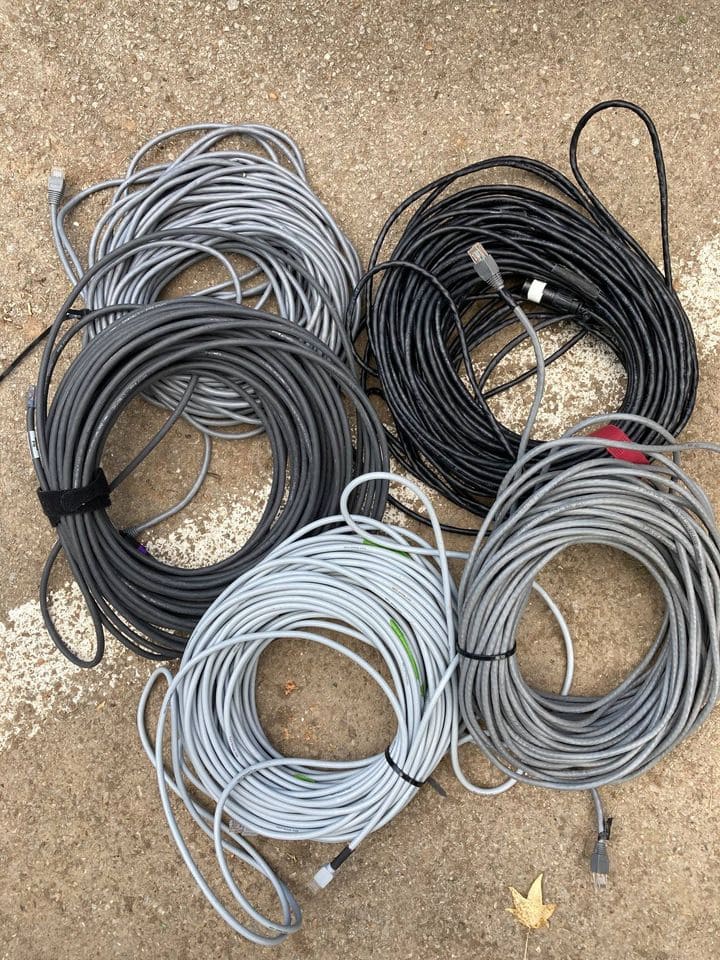
Understanding Cat6 Ethernet Cable Specifications
To grasp the speed capabilities of Cat6, it’s essential to look beyond the numbers and understand the underlying technology that defines this popular networking standard. The specifications cover its physical construction and performance benchmarks, which dictate its suitability for different network environments.
What Defines a Category 6 (Cat6) Cable?
A Category 6 cable is a standardized twisted pair cable for Ethernet and other network physical layers that is backward compatible with the Category 5/5e and Category 3 cable standards. Defined by the Telecommunications Industry Association (TIA) and Electronic Industries Alliance (EIA), the Cat6 standard requires cables to meet more stringent specifications for crosstalk and system noise than its predecessors. Internally, Cat6 cables often feature a plastic spline that separates the four twisted pairs of copper wire, which significantly reduces *crosstalk* between the pairs and allows for higher performance.
Differentiating Between Data Rate (Gbps) and Bandwidth (MHz)
It’s a common point of confusion, but data rate and bandwidth are not the same. Data rate, measured in Gigabits per second (Gbps), refers to the amount of data transmitted over the network in a given time. Bandwidth, measured in Megahertz (MHz), refers to the frequency range a cable is rated to handle. Cat6 cables are specified to perform at frequencies up to 250 MHz. This higher bandwidth capacity is what allows Cat6 to handle a higher data rate (10 Gbps) compared to Cat5e, which is rated for 100 MHz.
The Core Question: Is Cat6 1Gbps or 10Gbps?
The answer is not a simple “yes” or “no” but rather a conditional “both.” The maximum data rate a Cat6 cable can sustain is directly linked to its length and the surrounding environment, which can introduce signal-degrading interference.
The Decisive Factor: Cable Length
The TIA/EIA-568 standard specifies precise distance limitations for Cat6 performance. For 10GBASE-T, the standard for 10 Gbps networking, a Cat6 cable can only maintain this speed up to a maximum length of 55 meters (180 feet). Beyond this point, signal degradation becomes too significant. For the more common 1GBASE-T (1 Gbps) speed, a Cat6 cable can support the full maximum channel length of 100 meters (328 feet), which includes patch cords at both ends. This makes it a robust and reliable choice for most standard network drops.
| Data Rate | Maximum Distance | Common Use Case |
|---|---|---|
| 10 Gbps (10GBASE-T) | Up to 55 meters (180 ft) | Data center racks, server-to-switch links |
| 1 Gbps (1GBASE-T) | Up to 100 meters (328 ft) | Standard office/home LAN drops, PC connections |
Environmental Factors Influencing Performance
Beyond length, real-world performance is impacted by external factors. A key issue, especially for 10 Gbps transmission, is Alien Crosstalk (AXT). This is the electromagnetic interference caused by adjacent, parallel cables in a bundle. Cat6 was not originally designed with 10 Gbps in mind, so it has limited protection against AXT. Furthermore, proximity to power cables, fluorescent lighting, and electric motors can introduce noise that degrades the signal. Proper installation techniques, such as respecting bend radius limits and using quality connectors, are vital to achieving the cable’s rated speeds.
How Cat6 Compares to Other Ethernet Standards
Choosing the right cable involves comparing its capabilities and cost against other available standards. Cat6 sits in a sweet spot for many applications, but understanding its relationship with Cat5e and Cat6a is key to making an informed decision.
Cat6 vs. Cat5e: The Upgrade for Gigabit Networks
Cat5e (Enhanced Category 5) is also rated for 1 Gbps speeds up to 100 meters. However, Cat6 offers improved performance due to its higher bandwidth (250 MHz vs. 100 MHz) and better crosstalk specifications. This provides a more reliable and stable 1 Gbps connection with greater headroom, making it a better choice for new installations to ensure robust performance, especially in noisy environments. Cat5e has no official support for 10 Gbps at any distance.
Cat6 vs. Cat6a: The Solution for 10Gbps over Distance
Category 6a (Augmented Category 6) is the true standard for running 10GBASE-T over the full 100-meter distance. It operates at a bandwidth of 500 MHz and features significant design improvements, including better shielding and tighter wire twists, to virtually eliminate the problem of Alien Crosstalk. While Cat6 can technically run 10 Gbps over short distances, Cat6a is the recommended and certified solution for any new structured cabling installation intended to support 10 Gbps networking to workstations or across a building.
| Specification | Cat5e | Cat6 | Cat6a |
|---|---|---|---|
| Max Data Rate | 1 Gbps | 10 Gbps | 10 Gbps |
| Max Distance for Top Speed | 100m (at 1 Gbps) | 55m (at 10 Gbps) | 100m (at 10 Gbps) |
| Bandwidth | 100 MHz | 250 MHz | 500 MHz |
| Alien Crosstalk Performance | Not specified | Minimal | Improved |
Practical Applications: When Should You Use Cat6?
The versatility of Cat6 makes it suitable for a wide range of applications, but its selection should be strategic, based on current needs and future network upgrade paths.
Ideal Scenarios for 1Gbps Deployments
For the vast majority of modern business and home networks, Cat6 is an excellent choice. It provides a reliable, high-performance foundation for 1 Gbps connections to desktops, printers, wireless access points, and smart TVs. Its superior specifications over Cat5e ensure a stable connection with fewer errors, making it the de-facto standard for new installations where 1 Gbps is the primary requirement. It is cost-effective and provides sufficient performance for most user-facing applications today.
Strategic Use Cases for 10Gbps over Short Distances
The 10 Gbps capability of Cat6 is best leveraged in high-density, short-run environments. This includes interconnecting network switches, connecting servers to a switch within the same rack, or linking storage area networks (SANs) in a data center. In these controlled settings where cable runs are well under 55 meters, Cat6 provides a cost-effective way to achieve 10 Gbps performance without the higher expense of Cat6a or fiber optic cabling.
Frequently Asked Questions about Cat6 Speed
Can I use a Cat6 cable for my 1Gbps home internet connection?
Absolutely. Cat6 is perfectly suited and even recommended for a 1Gbps internet connection. It can easily handle this speed over the typical distances found in a home, providing a stable and reliable link between your modem, router, and devices.
What happens if I use a 70-meter Cat6 cable for a 10Gbps connection?
If you exceed the 55-meter limit for a 10Gbps connection with a Cat6 cable, you will likely experience significant performance degradation. The connection may not stabilize at 10 Gbps, and you could face intermittent connectivity, high error rates, and packet loss. In most cases, the networking hardware will automatically negotiate down to a lower speed, such as 1 Gbps, 2.5 Gbps, or 5 Gbps, where the connection is stable.
Is it worth paying more for Cat6a over Cat6?
The decision depends on future-proofing. If your current needs are met by 1 Gbps and you don’t anticipate a widespread upgrade to 10 Gbps to the desktop within the cable’s lifespan, Cat6 is a sound, economical choice. However, if you are installing cabling in a new building or plan to deploy 10 Gbps devices over standard 100-meter distances, the additional upfront cost of Cat6a is a wise investment to avoid expensive re-cabling later.
How do I know if my Ethernet cable is Cat6?
You can identify the cable category by reading the text printed on the outer jacket of the cable. The jacket will typically be marked with “Category 6,” “Cat6,” or a similar identifier, along with other specifications like the wire gauge (AWG) and type (e.g., UTP for Unshielded Twisted Pair).